


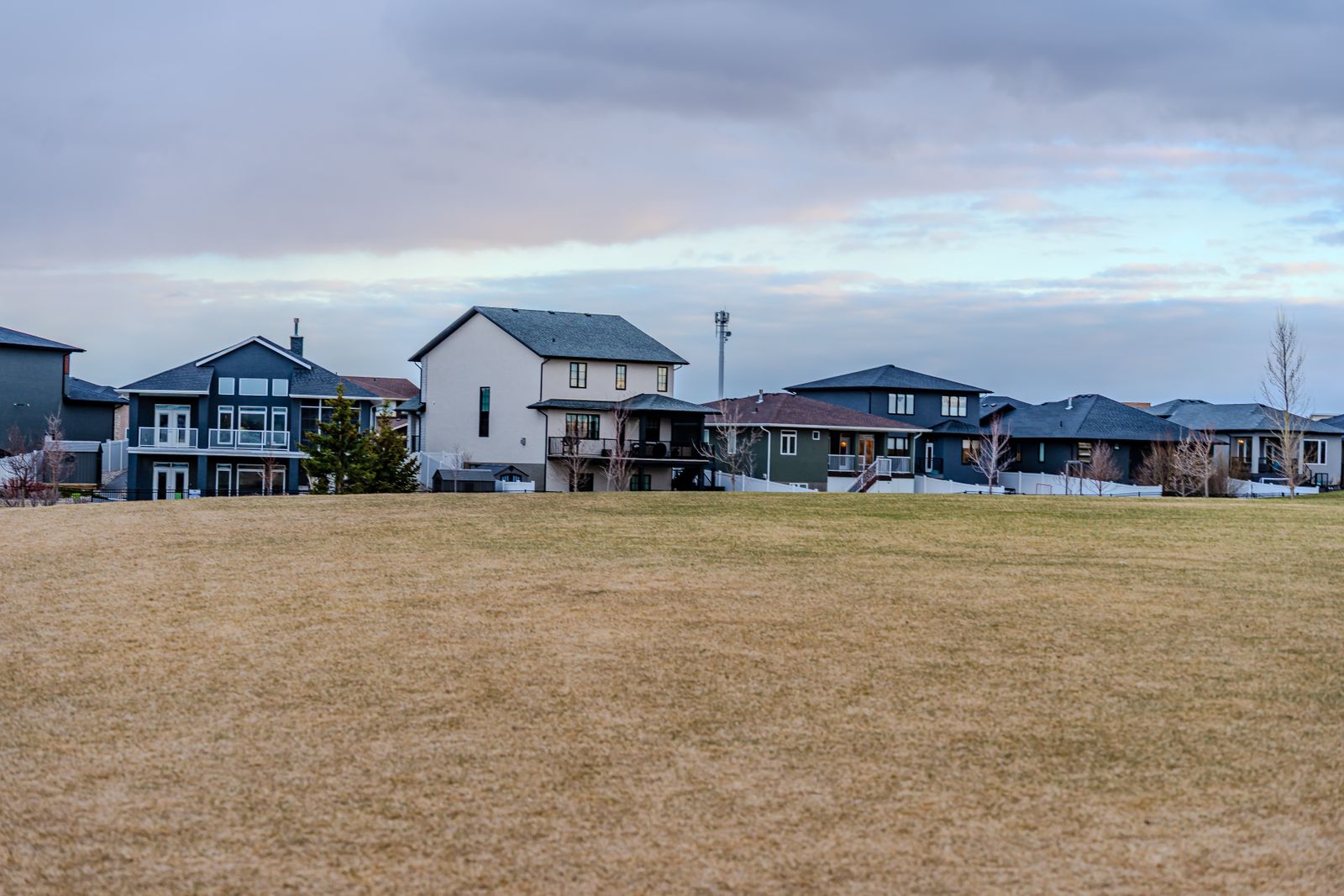
The word "crash" is doing a lot of work online right now. National housing-crash videos pulled more than 300,000 views in a single month, and almost none of them mention Central Alberta. So here is the local version — built on Red Deer's own MLS® numbers instead of a national headline.
The short version: Red Deer is not behaving like a market in trouble. It is behaving like a market where buyers finally have room to think.
The answer sits in three numbers
Over the 60 days ending August 24, detached homes in Red Deer sold at 98.4% of asking, in a median of 26 days, at a median price of $465,000. My Market Balance Index reads 57 out of 100 — a balanced market.
That combination is the useful part. A market coming apart shows it in two places: the gap between asking and selling widens, and homes sit longer. Red Deer detached is doing neither.
Two questions people keep mixing up
"How is the market doing?" and "what has my home gained?" sound like the same question. They are not, and they are answered over different lengths of time.
For how the market is doing, one year is the right window — and a single year is too short to put a percentage on. The measurement error on a one-year change is wide enough that the number cannot be told apart from zero, so I give it in words: Red Deer detached is up modestly over the past year.
For what your home has gained, two years is the right window, and there the number holds up. Through July 2026, the benchmark Red Deer detached home — 1,238 sq ft, 22 years old, a four-bedroom bi-level with a garage and finished basement — prices out at $482,469, up 10.1% over the past two years. Across all home types together it is up 11.8% over the same two years.
One caveat that keeps those numbers honest: that is a two-year total, not a yearly rate. Cutting it in half and calling it annual appreciation would overstate what the last twelve months actually did, by quite a lot. It also comes off a quality-adjusted benchmark index rather than a raw average, which means it follows the market rather than whatever mix of houses happened to sell that month.
And Red Deer is not one market
This is where most of the crash conversation falls down. "The market" is four different markets wearing one name, and in August they are not moving together.
| Segment | Median price | Balance | Months of inventory | Median days |
|---|---|---|---|---|
| Detached | $465,000 | Balanced · MBI 57 | 1.87 | 26 |
| Semi-detached | $327,750 | Slight seller · MBI 60 | 1.33 | 30 |
| Row / townhouse | $289,450 | Slight seller · MBI 64 | 1.42 | 25 |
| Apartments | $208,250 | Balanced · MBI 40 | 2.76 | 46 |
Semi-detached is the tightest segment in the city at 1.33 months of inventory, with row and townhouse just behind at 1.42. Apartments give buyers the most selection at 2.76 months, and the most time to decide, at a median of 46 days. Both are true at once, in the same city, in the same month — which is why a national headline about "the housing market" cannot tell a Red Deer townhouse owner anything useful.
What is holding demand up
Two pieces of backdrop, and both need their limits stated.
Alberta added a net 28,843 people over the 12 months ending Q1 2026 — 21,529 of them from other provinces. That is a province-wide figure, not a Red Deer count, and it is well below the year before. But tens of thousands of people still arrived, and all of them needed somewhere to live.
Closer to home, unemployment across the Red Deer economic region averaged 6.14% over the past 12 months, against 6.96% for Alberta as a whole. The economic region is wider than the city — it takes in the surrounding towns and acreages — but on a full year of data it has been running below the provincial average, and steady employment is what keeps people buying houses.
What to do with this
If you are buying, this is the most straightforward market we have had in a while. There is real selection, particularly in apartments and detached, and enough time to see a place twice before deciding. The homes that are priced sensibly still go quickly, so being ready to move on the right one still matters.
If you are selling, the numbers are on your side when the price is set against real recent comparables from the start — those are the homes changing hands at 98.5% of asking in about three and a half weeks. The ordinary work does most of the rest: declutter, handle the small repairs a buyer will notice, get the photography right.
The bottom line
Red Deer prices are up modestly over the past year and up 10.1% over two, and homes are selling near asking, quickly, in every segment in the city. That is not a crash. It is a market with more room in it than it had a year ago.
The question worth asking was never "is the market crashing." It is "what is my home type doing, in my neighbourhood, right now." That one is much smaller, and I can answer it with actual numbers. If you are weighing a move, let's book a quick call — or start with a home value estimate at kernrealty.ca/home-value.
Source: MLS® data · analysis by Jay Kern · August 2026. Red Deer segment figures are 60-day rolling as of August 8, 2026; benchmark index figures are through July 2026. Migration: Statistics Canada, 12 months ending 2026 Q1. Labour: Statistics Canada Labour Force Survey, 12-month average to July 2026. Deemed reliable but not guaranteed.